
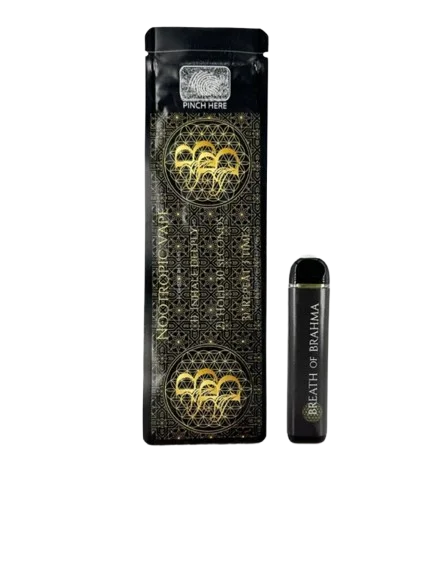
This article is for information only and is not legal advice. Drug laws change frequently and differ by jurisdiction. If you need legal guidance, consult a qualified attorney in your area.
One of the most common questions people ask about this substance is a simple one: is DMT legal? The short answer is that in most places, no. DMT (N,N-dimethyltryptamine) is a controlled substance under federal law in the United States and is restricted in most countries. But a handful of states and cities have changed their enforcement approach, narrow religious exemptions exist, and the international landscape varies. This guide breaks it down as of 2026.
Is DMT Legal in the US? Federal Law
At the federal level, the answer is unambiguous: DMT is illegal in the United States. The Drug Enforcement Administration (DEA) classifies DMT as a Schedule I controlled substance under the Controlled Substances Act — the same category as heroin and LSD. Schedule I is reserved for substances the federal government considers to have a high potential for abuse and no currently accepted medical use.
What Schedule I status means in practice:
- Manufacturing, distributing, or possessing DMT is a federal crime.
- Penalties can include substantial fines and prison time, scaling with quantity and whether distribution was involved.
- Federal law applies in every state — including states or cities with more lenient local policies.
That last point is the key to the whole topic. When people ask where is DMT legal, the honest federal answer is “nowhere in the United States.” Everything below describes state or local reforms that operate underneath — not above — federal law.
DEA’s official controlled substances scheduling information
Decriminalization vs. Legalization: Why the Distinction Matters
Much confusion around this topic comes from mixing up two different things. Legalization creates a lawful, regulated market. Decriminalization merely removes or reduces criminal penalties for personal possession — it does not create a legal way to buy or sell the substance.
Every US reform described below falls into the second category (or an even weaker one: deprioritized enforcement). There is currently no jurisdiction in the United States where you can legally purchase DMT vape products in a store.
Where Is DMT Legal? State-by-State Notes
Federal law hasn’t budged, but several states have moved toward decriminalization or regulated access. Here’s the picture as of 2026 — treat it as a snapshot, since this area of law is evolving quickly.
Is DMT Legal in Colorado?
Colorado is the furthest along of any state. In 2022, voters passed Proposition 122 (the Natural Medicine Health Act), which decriminalized the personal use and possession of several natural psychedelics, including DMT. The law also created a framework for state-regulated psilocybin healing centers.
The nuance matters: decriminalization is not legalization. Commercial sale of DMT remains illegal in Colorado, unlicensed manufacturing is still a crime, and federal law still applies on federal land and in federal prosecutions. What Prop 122 changed is that personal possession is no longer a state-level crime.
Is DMT Legal in Oregon?
Oregon’s situation is widely misunderstood, so it’s worth being precise. In 2020, Measure 110 decriminalized personal possession of small amounts of all drugs, including DMT. But in 2024, the legislature recriminalized possession through HB 4002, making it a misdemeanor again. Oregon’s separate Measure 109 created a regulated psilocybin services program — but that applies to psilocybin only, not DMT.
Bottom line for Oregon as of 2026: DMT remains illegal under both state and federal law.
Is DMT Legal in California?
California has seen repeated legislative attempts at reform — most notably SB 58, which would have decriminalized several natural psychedelics but was vetoed by the governor in 2023. As of 2026, DMT remains fully illegal under California state law.
Some cities, including Oakland, Santa Cruz, and San Francisco, have passed resolutions making the enforcement of laws against natural psychedelics a low priority for local police. These are deprioritization measures, not legalization — state law still prohibits DMT, and the resolutions don’t protect against state or federal action.
Is DMT Legal in Michigan?
DMT is illegal under Michigan state law, with no statewide reform in effect. However, several Michigan cities — including Ann Arbor, Detroit, Hazel Park, and others — have passed measures making the investigation and prosecution of natural psychedelics the lowest law enforcement priority. As with California’s city resolutions, this is deprioritization, not a change in the law itself.
Is DMT Legal in Texas?
Texas maintains some of the strictest drug laws in the country, and DMT is illegal there with no decriminalization measures in place. Penalties for possession can be severe, and distribution carries heavy mandatory consequences. There has been limited legislative activity around funding psychedelic research, but nothing that alters DMT’s legal status for personal use or sale.
Is DMT Legal in Canada?
In Canada, DMT is classified as a Schedule III substance under the Controlled Drugs and Substances Act. Unauthorized possession, production, and trafficking are all illegal, though the scheduling reflects a different official risk assessment than the US Schedule I classification.
Canada has granted at least one religious exemption: the Santo Daime church community in Montreal received permission to use ayahuasca sacramentally in the mid-2000s. As in the US, this kind of exemption is narrow — it covers a specific church’s ceremonial use, not general possession or commercial products.
Is DMT Legal Anywhere? Religious Exemptions and International Nuance
Strictly speaking, no country has a broad, commercial legal market for DMT. But narrow exceptions exist:
- Religious use in the United States: In Gonzales v. O Centro Espirita Beneficente Uniao do Vegetal (2006), the US Supreme Court upheld a Brazilian-based church’s right to use ayahuasca (which contains DMT) in religious ceremonies under the Religious Freedom Restoration Act. A similar federal exemption covers the Santo Daime church. These rulings protect specific churches’ sacramental use — not personal possession by the general public.
- Brazil and Peru: Ayahuasca holds traditional and legally recognized religious standing in these countries. This covers ceremonial brew use within religious contexts, not DMT vape pens or commercial products.
- The Netherlands: DMT itself is a controlled substance, though court cases around ayahuasca ceremonies have produced mixed outcomes over the years.
The pattern is consistent: wherever DMT has any legal breathing room, it’s tied to traditional religious ceremony — never to vape pens, carts, or retail products.
The Bottom Line
Is DMT legal? Under US federal law: no. In nearly every state and nearly every country: no. A few jurisdictions have decriminalized personal possession or deprioritized enforcement, and a few churches hold narrow sacramental exemptions — but none of that amounts to a legal commercial market.
Because psychedelic policy is shifting quickly, treat this as a 2026 snapshot. If it affects real decisions, verify the current law in your jurisdiction — and talk to a lawyer, not a blog post.
Frequently Asked Questions
Is DMT legal in the US?
No. DMT is a Schedule I controlled substance under federal law, which makes manufacturing, distributing, and possessing it a federal crime in all 50 states.
Where is DMT legal?
There is no US state or country where DMT is fully legal for general or commercial use. Colorado has decriminalized personal possession, several cities have deprioritized enforcement, and narrow religious exemptions exist for ayahuasca churches.
Is DMT legal in Colorado?
Personal use and possession were decriminalized under Proposition 122 (2022). Commercial sale remains illegal, and federal law still applies.
Is DMT legal in California or Texas?
No. DMT remains illegal under state law in both. A few California cities have made enforcement a low local priority, but that is not legalization, and Texas has no decriminalization measures at all.
Is DMT legal in Canada?
No. DMT is a Schedule III substance under the Controlled Drugs and Substances Act, and unauthorized possession or trafficking is illegal.
Can DMT vapes be sold legally anywhere in the US?
No. There is no legal commercial market for DMT vape products under federal law. Be skeptical of any vendor claiming otherwise.
Related Reading
For background on what DMT is and how vape formats work, see our pillar guide: What is DMT?. For product details, see the Breath of Brahma DMT vape here: Breath of Brahma DMT vape.