
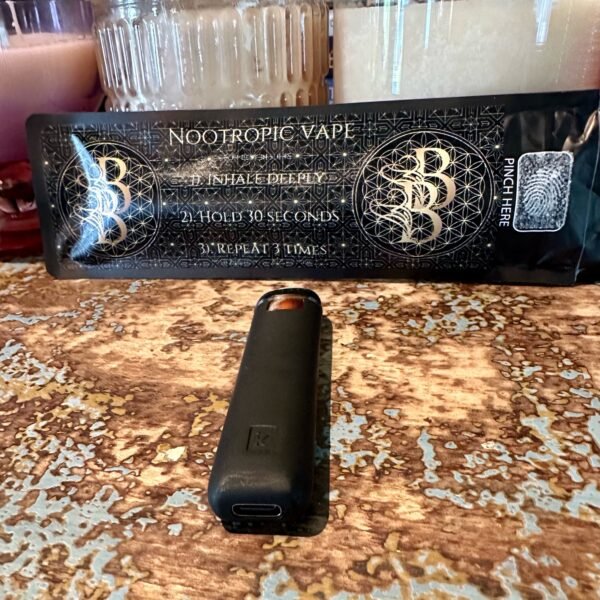
This article is for information only and is not medical advice. DMT is a powerful psychoactive substance with real risks. Nothing here encourages use or replaces professional guidance.
How Quickly Do the Effects of DMT Come On?
When vaporized, DMT is known for its unusually rapid onset — one of its most distinguishing features. People commonly report feeling effects within seconds of inhalation, with the peak arriving within a couple of minutes. The most intense phase typically lasts around 5–15 minutes, followed by a gradual return to baseline over the next 20–30 minutes.
This short, steep curve separates vaped DMT from longer-acting psychedelics. Oral forms such as ayahuasca — where companion plants inhibit the enzymes that break DMT down — extend the experience to hours. The vaped form compresses an enormous amount of subjective experience into a very short window, which is why even experienced users describe it as overwhelming.
Commonly Reported Subjective Effects
The effects of DMT vary considerably from person to person and from session to session, but certain features appear again and again in user reports and survey research:
- Rapid, immersive visuals — geometric patterns, vivid colors, and fully formed scenes that can feel more “real” than everyday perception.
- A sense of leaving the body or being transported to an entirely different space or dimension.
- Entity encounters — meetings with seemingly autonomous beings or presences are among the most widely reported and most discussed features in the literature.
- Radical time distortion — minutes of clock time can feel like far longer from the inside.
- Euphoria and awe, or conversely fear, confusion, and panic — the emotional tone is unpredictable, especially at high intensity.
- Difficulty recalling the experience afterward; many people report that the memory fades quickly, like waking from a dream.
Difficult experiences are well documented and can be genuinely distressing — panic, a sense of dying, or encounters perceived as hostile all appear in the reports.
DMT Effects on the Brain
What is happening neurologically? In simplified terms, DMT effects on the brain center on the serotonin system. DMT acts primarily as an agonist at serotonin receptors — particularly the 5-HT2A receptor, the same target most associated with the effects of LSD and psilocybin. Activating these receptors appears to disrupt ordinary patterns of neural activity, including dampening the brain’s “default mode network,” a system linked to self-referential thought and the sense of a stable ego.
Beyond that shared mechanism, the human body produces trace amounts of DMT endogenously, though any natural function remains unknown — speculation has far outrun evidence. And while brain-imaging research on psilocybin and LSD has grown substantially, imaging studies of DMT remain comparatively limited.
What the research does support: the intensity of the experience tracks with measurable changes in brain activity, and the rapid onset and short duration mirror DMT’s fast metabolism — the body clears it quickly, which is why the experience is so brief.
DMT Effects on the Body
The psychological fireworks get most of the attention, but DMT effects on the body are real and shouldn’t be ignored:
- Increased heart rate and blood pressure — the most consistently documented physical effects.
- Nausea or stomach discomfort, especially during the onset phase.
- Sweating, trembling, or restlessness as the experience builds.
- Dilated pupils and heightened sensitivity to light.
- Loss of motor coordination during the peak — people are typically incapacitated for the intense minutes.
These physical effects generally follow the same short timeline as the psychological ones. But “short-lived” is not “harmless”: for anyone with a cardiovascular condition, the spike in heart rate and blood pressure is a meaningful risk.
DMT Vape Side Effects
Vaping as a delivery method adds its own layer of considerations on top of DMT’s general effects. Commonly discussed DMT vape side effects include:
- Harsh vapor. DMT vapor can be irritating to the throat and airways, and coughing during onset is common. Poor vaporization technique makes this worse.
- DMT headache. A notable number of users report headaches during or after the experience. The cause isn’t established — blood pressure swings, dehydration, jaw and neck tension during an intense experience are all plausible contributors.
- Nausea. Less prominent than with oral ayahuasca, but still reported by some users.
- Residual unease. After difficult experiences, anxiety or emotional rawness can linger for hours or longer.
- Respiratory irritation with repeated use of vape hardware in a short period.
There’s also a product-quality dimension that has nothing to do with DMT pharmacology: unregulated vape products can contain unknown cutting agents, residual solvents, or contaminants. A side effect caused by an adulterant won’t appear in any DMT research — which is its own argument for understanding exactly what you’re dealing with.
DMT Tolerance: How Fast Does It Build?
DMT tolerance behaves differently from most substances people are familiar with. Research and consistent user reports describe rapid acute tolerance (tachyphylaxis): doses taken in quick succession produce sharply diminishing effects, sometimes within a single session. Where other substances build tolerance over days or weeks of use, DMT can blunt its own effects within minutes of repeated administration.
The unusual part is the reset. Unlike the lingering tolerance associated with many drugs, DMT tolerance appears to resolve quickly — often within about an hour. There is no strong evidence of lasting tolerance accumulation with infrequent use.
Two practical implications follow from this. First, the pharmacology itself discourages compulsive redosing — taking more, sooner, mostly doesn’t work. Second, DMT is not considered physically addictive; there is no withdrawal syndrome. That said, psychological habituation is still possible with any intensely rewarding substance, and “not addictive” should never be read as “risk-free.”
Safety Notes Worth Taking Seriously
No use of an illegal psychoactive substance is without risk, and no list of tips makes it safe. But harm-reduction literature converges on the same core principles, and they’re worth stating plainly:
- Set and setting matter enormously. Your mental state going in and the safety of your environment shape the experience more than most people expect.
- A sober sitter. Having a trusted, sober person present — someone who can keep you physically safe while you’re incapacitated — is the single most repeated recommendation in harm-reduction sources.
- Don’t mix substances. Combining DMT with other drugs, including alcohol, adds unpredictable risks. Combinations involving MAO inhibitors are specifically documented as dangerous.
- Know your health status. Cardiovascular conditions, a personal or family history of psychosis, and certain psychiatric medications (notably SSRIs and MAOIs) are flagged as contraindications in the literature. This is a conversation for a doctor, not a blog.
- Plan for the comedown. Even smooth experiences can leave people emotionally raw. Having calm, quiet time afterward — and someone to talk to if it was difficult — matters more than people expect.
Frequently Asked Questions
How long do the effects of DMT last when vaped?
The intense phase typically lasts 5–15 minutes, with onset in seconds and a gradual return to baseline over roughly 20–30 minutes.
What does DMT do to the brain?
DMT acts primarily on serotonin receptors, especially 5-HT2A, disrupting normal neural activity patterns. Brain-imaging research on DMT is still limited compared with psilocybin or LSD.
Does DMT cause headaches?
Headaches are among the commonly reported side effects — possibly related to blood pressure changes, dehydration, or physical tension during the experience. The exact cause isn’t established.
Can you build a tolerance to DMT?
Yes. DMT produces rapid short-term tolerance, so repeated doses in quick succession have diminishing effects. Tolerance typically resets within about an hour.
Is DMT physically addictive?
DMT is not considered physically addictive and produces no withdrawal syndrome. Psychological habituation is still possible, as with any intensely sought experience.
What are the main physical risks of DMT?
Increased heart rate and blood pressure are the most consistently documented physical effects. People with cardiovascular conditions or a history of psychosis face elevated risk.
Related Reading
For the broader picture — what DMT is, how vape formats differ, and the legal landscape — see our guides: What is DMT? and Is DMT Legal?. For product details, see the Breath of Brahma DMT vape here: Breath of Brahma DMT vape.